
Areas · Forte dei Marmi
Gulf investment in Forte dei Marmi: luxury hotels, villas and local identity
From the opening of Principessa to hotel acquisitions: facts, tourism data and what the changes may mean for residential property.
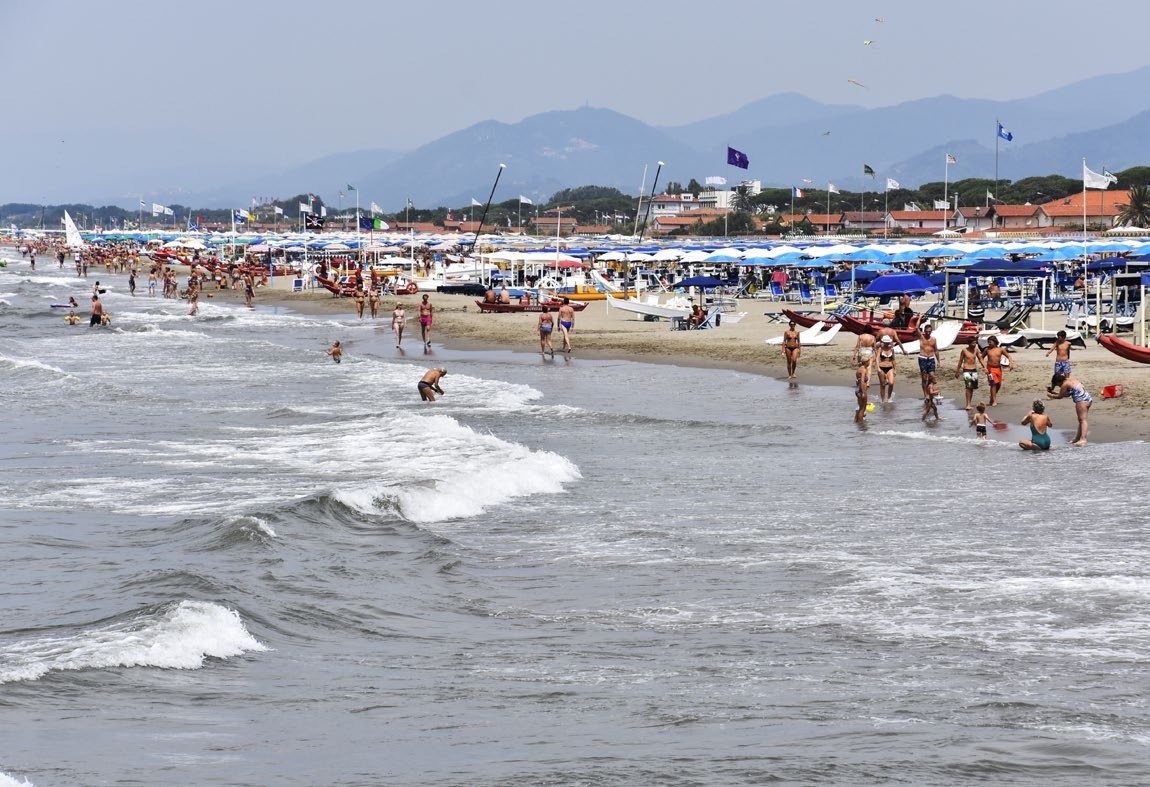
A destination can attract new investment precisely because it feels unlike anywhere else. For Forte dei Marmi, that raises an important question: how can new projects be welcomed without weakening the relationship between the sea, gardens, architecture and everyday life that gives the town its character?
Gulf investment in Forte dei Marmi deserves a concrete, project-by-project reading. A change of hotel ownership, the arrival of an international brand and a family buying a villa are different events, with different objectives, timescales and consequences.
Looking beyond the headlines
On 9 October 2026, The Times covered Gulf investment in Forte dei Marmi and the debate surrounding the town’s identity.
Italian reporting had already described this transition. In March 2026, Corriere Fiorentino quoted hotelier Paolo Corchia on eight hotels changing hands over two years, with plans to reposition them towards the five-star segment. This is a figure attributed to the newspaper’s source, not an official municipal register of transactions.
The most useful starting point is the documented individual project. An investor’s nationality does not, by itself, establish its quality. What matters is the programme, the management, the relationship with the neighbourhood and what is ultimately delivered.
Principessa: a new hospitality project
Marriott’s official release of 29 April 2026, carrying a statement dated 21 April, announced the opening of Principessa Forte dei Marmi, Autograph Collection. It describes 36 rooms and suites, a location opposite La Capannina and an architectural form inspired by a yacht.
On 20 February 2026, Il Tirreno linked ownership of the former Areion to Ahmed bin Saeed Al Maktoum. The project therefore combines the transformation of an existing hotel with participation in an international hospitality network.
From a property perspective, consistency is the interesting issue. Layout, materials, maintenance and service need to sustain the promised experience over time. A brand makes a project recognisable; the result is tested through everyday use and the building’s relationship with its surroundings.
Grand Hotel Imperiale: a transaction from 2024
The Grand Hotel Imperiale follows a different timeline. On 21 October 2024, T24 Economia reported its acquisition by Emaar founder Mohamed Ali Alabbar in a personal capacity. The reported price approached €40 million for the hotel and Remo Beach. This is a press-reported figure, not a price independently verified against a notarial deed.
It is not a newly completed transaction from October 2026. Revisiting the purchase helps explain a multi-year transition; presenting it as a fresh acquisition would distort the chronology. Plans announced after a sale must also be distinguished from work that has actually been completed.
Tourism figures: more nights, not just more arrivals
Investment activity should be considered alongside the use of accommodation. The municipality’s official 2024–2025 table provides a consistent comparison covering the hotel sector only.
| Indicator | 2024 | 2025 | Change |
|---|---|---|---|
| Arrivals | 112,787 | 115,895 | +2.76% |
| Overnight stays | 487,922 | 539,350 | +10.54% |
| Average stay, nights | 4.33 | 4.65 | — |
Real Estate Advisor calculations using municipal data. Changes and averages are rounded.
Overnight stays measure nights spent in accommodation, not the number of distinct people. Their 10.54% increase exceeds the 2.76% rise in arrivals; the calculated average stay rises from approximately 4.33 to 4.65 nights.
These figures do not automatically include the entire villa-rental market or establish that new investors caused the growth. They also refer to 2025, whereas Principessa opened in 2026. This distinction prevents a causal interpretation that the evidence does not support.
Architecture and renovation: the value of context
At Real Estate Advisor, we believe a renovation should also be judged by the space it leaves for its setting. A mature garden, a discreet entrance, the shade of a portico or a well-designed connection between indoor and outdoor rooms can matter more than a conspicuous finish. Such qualities need to be experienced in person; they do not follow automatically from the construction budget.
The same principle can inform hospitality and residential projects, despite their different purposes. Updating a building need not erase its character. Before imagining extra floor space or facilities, it is worth understanding which proportions, views and relationships with greenery should be retained.

Our Journal also explores Villa La Nave and Tiziano Lera’s design, offering a specific architectural case through which to consider the quality of a home.
What this means for villa buyers and sellers
A broader hotel offering can create more opportunities to discover a destination. Some guests may later consider a longer stay or a home, but we do not have data measuring that progression in Forte dei Marmi. It should not be converted into an automatic prediction of residential demand or price growth.
For buyers, the tourism setting is one part of the decision, not a valuation of the property. Location, privacy, condition, layout and the size and usability of the garden all need comparison. A villa close to services may suit different priorities from a home selected primarily for peace and seclusion.
For sellers, news of a major investment does not replace relevant comparables. A presentation should explain the home’s specific qualities and positioning, rather than assuming a general premium because a hotel in the same town has changed hands.

Beaches, services and quality of life
The quality of a destination is also tested beyond a hotel room or a villa gate. A family may value easy journeys, businesses that remain open outside summer and the freedom to enjoy the centre without planning every outing. A short-stay visitor may place greater emphasis on restaurants and dedicated services.
In our view, discussion of new investment should recognise those different needs. International prestige and liveability are not necessarily opposites, but balancing them requires practical attention to public spaces, continuity of services and residents’ experience.
Beach establishments also raise separate administrative questions. Ownership of a business should not be confused with ownership of the beach. For anyone considering an operation involving coastal hospitality, the business, its premises and the basis on which it operates should be considered separately rather than treated as a single, undifferentiated asset.
The Real Estate Advisor perspective
The most useful story is not of a town destined to become a copy of another resort. It is of a place that can renew its offering while retaining authentic reasons to choose it. We see a successful transformation as one that improves the experience of residents and visitors without reducing the landscape to a backdrop.
Anyone considering buying a villa in Forte dei Marmi can begin with specific needs: intended periods of use, location, outdoor space and the desired level of maintenance. Real Estate Advisor approaches that search by considering each property in its setting, through individual assessment rather than conclusions drawn solely from headlines.
Updated 10 October 2026. Facts are attributed to the sources below; comments on residential property are editorial analysis, not return forecasts. Photographs come from this website’s archive: the villas shown are not the hotels discussed and do not document acquisitions by the investors mentioned.